Australian community pub case studies
A working register of Australian community-owned, co-operative, and community-benefit pub and hotel precedents, with verification labels and lessons for Cygnet.
A working register of Australian community-owned, co-operative, and community-benefit pub/hotel precedents.
Last reviewed: 2026-05-18. This is a Stage 1 evidence document, not proof that the Bottom Pub can be bought, financed, licensed, or operated. It collects examples that may help Cygnet ask better feasibility questions.
How to read this
Each case is labelled by evidence status: - **Verified analogue** — enough source material exists to treat the venue as a genuine community-owned or co-operative pub/hotel precedent. - **Historical analogue** — useful lineage, but the legal form or operating environment differs from a modern CNL co-operative. - **Candidate / needs source work** — named in research, but not yet strong enough for detailed public claims. The point is not to copy any one model. The point is to understand the range: old South Australian community hotels, modern CNL co-operatives, companies with community shareholders, non-distributing co-ops, tenanted models, and failure cases.This page is a reference tool, not a fundraising claim. Use it to compare legal structure, capital formation, operating risk, and what actually worked or failed.
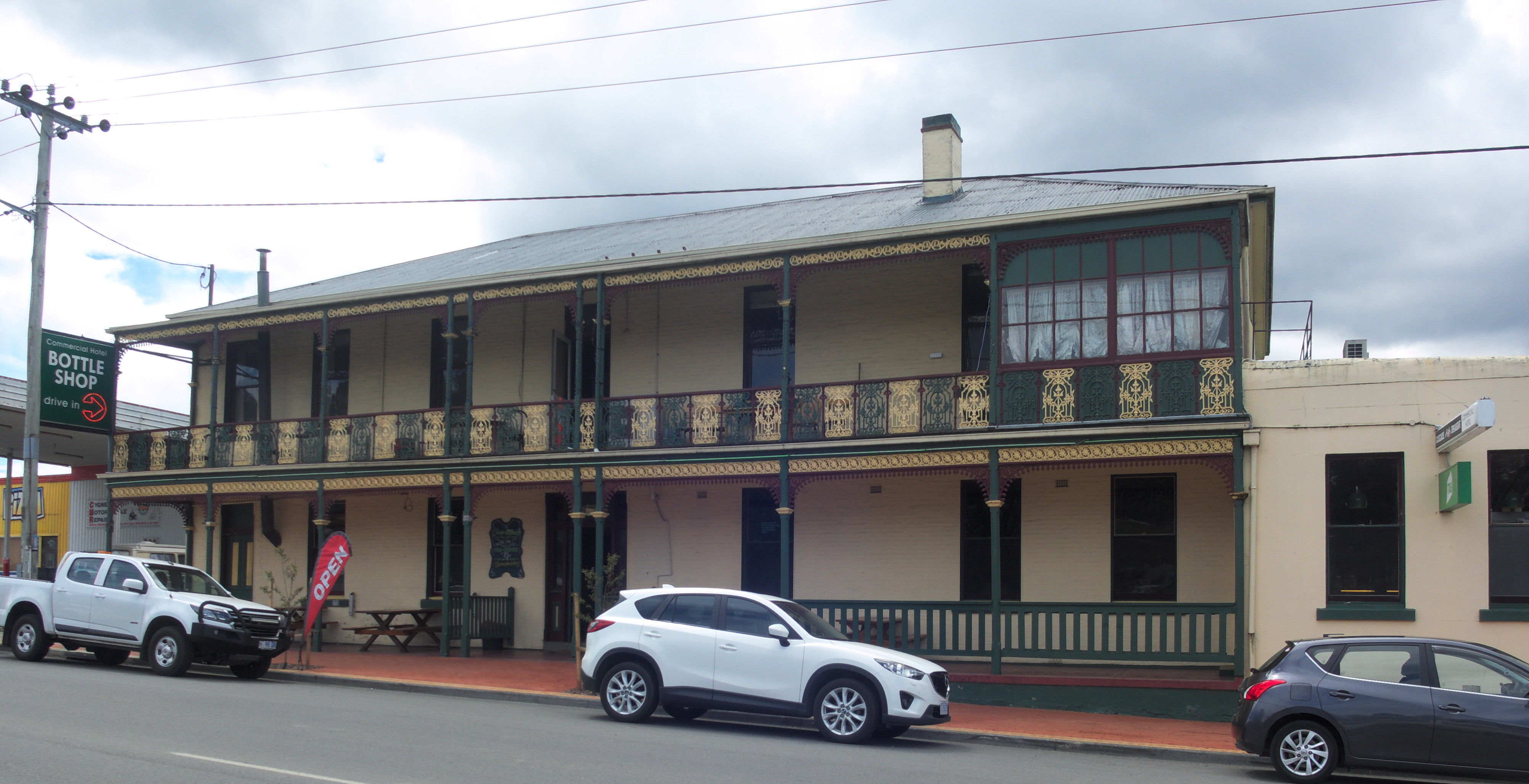
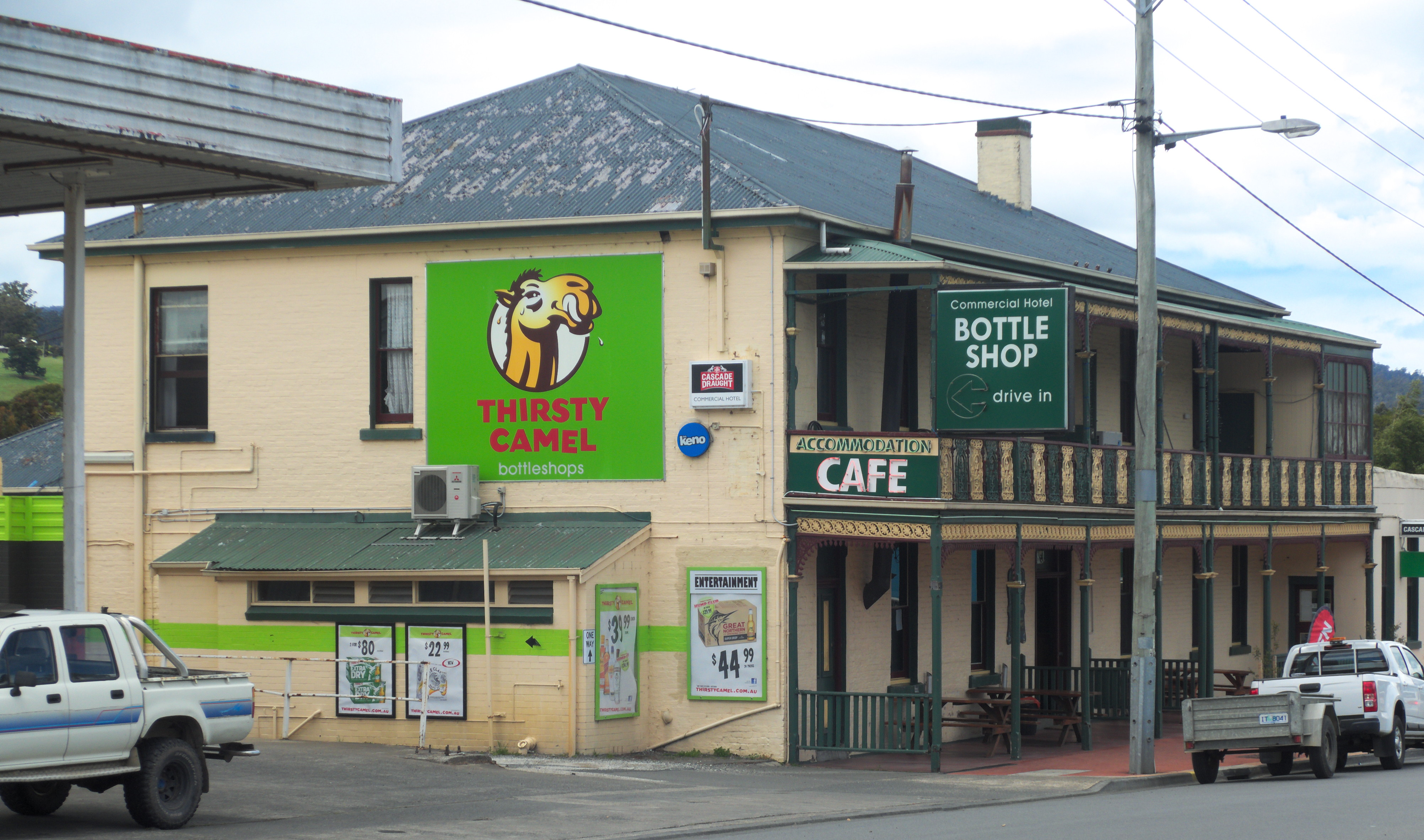

Strongest analogues
Sea Lake, Lockington, Grong Grong, Nandaly, and Broomehill are the modern Australian pub/hotel precedents most worth studying for capital formation and operating structure.Why the page is here
The case register is not a proof bundle. It is a filter for better feasibility questions: who owns the building, who holds the licence, who carries the risk, and what kind of co-op would actually fit Tasmania.What the shortlist shows
Strongest analogues in detail
| Case | Place | Type | Why it matters for Cygnet | Evidence status |
|---|---|---|---|---|
| Hotel Renmark | Renmark, SA | Community-owned hotel, Gothenburg lineage | Earliest Australian/British Empire community-hotel lineage; profits returned to town purposes | Historical analogue |
| Loxton Hotel | Loxton, SA | Community-owned hotel | Mature regional community hotel with local membership and current award recognition | Verified analogue |
| Vine Inn Barossa Community Hotel | Nuriootpa, SA | Community-owned hotel | Long-running Barossa example linked to community facilities and local reinvestment | Historical analogue |
| Ceduna Foreshore Hotel Motel | Ceduna, SA | Community hotel | Community purchase of hotel freehold in 1949; reinvestment through redevelopment | Historical analogue |
| Sea Lake Hotel Co-operative / Royal Hotel | Sea Lake, VIC | Hybrid: company owns building, co-op operates business | Strong modern rural analogue: condemned/closed pub, community rescue, accommodation, CNL co-op | Verified analogue |
| Lockington Community Hotel | Lockington, VIC | Community hotel co-operative | Modern town-rescue case; 96 shareholders and $600,000 capital reported by ABC | Verified analogue |
| Royal Hotel Grong Grong | Grong Grong, NSW | Community shareholder/co-operative model | Small village raised over $1m from 169 shareholders to keep the pub | Verified analogue |
| Nandaly Community Hotel | Nandaly, VIC | Non-profit distributing co-operative | Tiny-town pub rescue; all surplus directed back to operations | Verified analogue |
| Broomehill Village Co-operative / Imperial Hotel | Broomehill, WA | Community co-operative hotel acquisition | 75 members in town of ~250 bought a historic hotel | Verified analogue |
| Dwellingup Community Hotel | Dwellingup, WA | Community-owned former State Hotel | WA former State Hotel acquired by local community around 1960; heritage context | Historical analogue |
| Hotel Theodore | Theodore, QLD | Former co-operative community hotel | Failure case after ~75 years: confirms community ownership does not remove cost and staffing risk | Failure case |
| The Bevy | Brighton, UK | Community Benefit Society | Shows grant reliance and cost-of-living vulnerability in a social-enterprise model | Verified analogue |
| The Ivy House | London, UK | Community Benefit Society | Demonstrates complex capital stacking (£1M+ freehold) and open share offers | Verified analogue |
| The Fox and Hounds | Ennerdale, UK | Community-owned pub (former) | Proves volunteer burnout is a severe risk even when trading is viable | Failure case |
Case studies
Hotel Renmark, South Australia
Status: Historical analogue.
What is verified: Hotel Renmark describes itself as community-owned and established in 1897 as the first British Empire community-owned hotel. SA Memory independently describes the Renmark Hotel as the first community hotel in the British Empire, officially opened in March 1897, with profits to be returned to town organisations, projects, and programs.
Useful details: The hotel is heritage-listed Art Deco, has accommodation, and its own history page records the former 62.4 metre bar and a first-floor museum. Its history page also describes early donations toward the Renmark Institute, hospital, fire station, public toilets, caravan park, roads, paving, parks, and gardens.
Lesson for Cygnet: This is not a modern CNL co-op precedent. It is the historical Australian community-hotel lineage: a pub as town infrastructure, with trading surplus used for public benefit.
Sources: Hotel Renmark — About; SA Memory — First community hotel in the British Empire.
Loxton Hotel, South Australia
Status: Verified analogue.
What is verified: Loxton Hotel states that it is owned by the community of Loxton. Membership is restricted by its constitution to adults who have lived in specified local postcodes for more than six months; members can nominate for the board and vote at general meetings.
Useful details: AHA SA named Loxton Hotel Best Overall Hotel - General Division (Country) in 2025. Food and Beverage Media also reported 2025 AHA SA success and described Loxton as community-owned.
Lesson for Cygnet: Local-membership design can be tight and place-based. That is useful for governance, but it may also exclude supporters outside the immediate district unless associate or supporter categories are deliberately designed.
Sources: Loxton Hotel — Hotel Members; AHA SA 2025 winners; Food & Beverage Media, 2025 AHA SA winners.
Vine Inn Barossa Community Hotel, Nuriootpa, South Australia
Status: Historical analogue.
What is verified: The Vine Inn’s history page says a committee formed in 1937 to purchase the Nuriootpa Hotel and turn it into a community-owned hotel, drawing on the Renmark and Barmera examples. The lease was purchased in September 1937 and the renamed Vine Inn Community Hotel opened in 1938.
Useful details: The same history records the hotel’s links to the Community Dairy and Community Bus. Barossa tourism material describes the Vine Inn as a community-owned hotel.
Lesson for Cygnet: The Nuriootpa story is a broader community-development case, not just a pub rescue. The warning is that the hotel sat inside a wider civic ecosystem; a single venue should not pretend it can carry every community aspiration at once.
Sources: Vine Inn — Our History; Barossa tourism — Vine Inn.
Ceduna Foreshore Hotel Motel, South Australia
Status: Historical analogue.
What is verified: The Ceduna Foreshore Hotel’s history page records that in 1949 the freehold of the Ceduna Hotel was offered to the district for 25,000 pounds, a public meeting was held, and the opportunity was framed as establishing a community hotel.
Useful details: The hotel later undertook staged redevelopment, including new hotel rooms overlooking Murat Bay. The hotel presents those works as part of its commitment to give back to the Ceduna community.
Lesson for Cygnet: Community ownership does not remove the need for major capital reinvestment. It can create a patient owner, but the building still needs commercial-grade renewal.
Source: Ceduna Foreshore Hotel Motel — History.
Sea Lake Hotel Co-operative / Royal Hotel, Victoria
Status: Verified analogue.
What is verified: BCCM / Co-operative Farming describes Sea Lake as a community-owned rural pub case. The building was initially purchased under a company structure; today a company formed by community members owns the hotel building and the co-operative operates the hotel business. BCCM’s handbook also describes the closure, mortgagee-sale context, and local/expat rescue.
Useful details: The case includes accommodation, a heritage building, staged restoration, a six-member board, and a professional hotel manager. The co-op rules and disclosure documents are public reference points for CNL design.
Lesson for Cygnet: Sea Lake is one of the closest Australian analogues because it separates asset ownership from business operation and evolved its legal structure as community interest grew. It also shows that “community-owned” does not have to mean a single simple entity.
Sources: Co-operative Farming / BCCM — Community co-op revitalises condemned pub; BCCM — Reinvigorating Rural Australia; Sea Lake Hotel Co-operative rules; Sea Lake Hotel Co-operative disclosure statement.
Lockington Community Hotel, Victoria
Status: Verified analogue.
What is verified: Lockington Hotel’s own site says the hotel was facing uncertainty in 2019, with owners approaching retirement and no interested buyers, before locals banded together to purchase and refresh it. ABC reported that the Lockington pub had 96 shareholders and capital of $600,000.
Useful details: The case was influenced by visits to Sea Lake and Nandaly. Later media reports describe award recognition, including a 2025 national AHA award.
Lesson for Cygnet: This is a clear “local service about to disappear” example. It also shows the reputational value of a successful community venue, but awards are not a substitute for feasibility.
Sources: Lockington Hotel — About; ABC News — regional co-operatives saving towns; Dairy News Australia — Lockington Hotel wins national award.
Royal Hotel Grong Grong, New South Wales
Status: Verified analogue.
What is verified: Australian Hotelier reported that locals bought $5,000 shares in the Royal Hotel, built in 1875, and that the pub had 169 shareholders and raised more than $1 million. PubTIC reported the same broad structure and fundraising outcome.
Useful details: The village had already lost other services, making the pub a social anchor. Shareholders included locals and people with personal or diaspora connections to the town.
Lesson for Cygnet: Grong Grong shows that diaspora and supporters outside the town can matter. The structure and disclosure pathway still need careful legal translation before any public offer language is used.
Sources: Australian Hotelier — NSW country pub becomes a cooperative; PubTIC — Royal locals team up to save the town’s pub.
Nandaly Community Hotel, Victoria
Status: Verified analogue.
What is verified: BCCM’s Reinvigorating Rural Australia handbook describes Nandaly as a community of about 45 people that raised funds to purchase and reopen the pub as a non-profit distributing co-operative, with profits returned to hotel operations. It opened as a co-operative venture in December 2018.
Useful details: The case was supported by social-enterprise training and Buloke Shire Council economic-development support.
Lesson for Cygnet: Nandaly is important because it is explicitly non-profit distributing. That makes it a better analogue for an asset-lock/grant-eligibility conversation than distributing-shareholder cases.
Source: BCCM — Reinvigorating Rural Australia.
Broomehill Village Co-operative / Imperial Hotel, Western Australia
Status: Verified analogue.
What is verified: ABC News reported that 75 members in a town of about 250 officially bought the historic Imperial Hotel in Broomehill through the Broomehill Village Co-operative.
Useful details: The BCCM account records 75 shareholders, $325,000 raised, plus regional-development and CBH Bunya Fund support.
Lesson for Cygnet: Broomehill is useful because the co-op acquired a heritage-scale hotel in a very small town. It also shows that grant/support funding can sit alongside community capital, but does not eliminate the need for member money and volunteer work.
Sources: ABC News — Broomehill Village Co-operative buys Imperial Hotel; BCCM — Reinvigorating Rural Australia.
Dwellingup Community Hotel, Western Australia
Status: Historical analogue.
What is verified: WA heritage documentation on former State Hotels notes that communities took over State Hotels in Dwellingup and Wongan Hills when government interest waned. A Heritage Council document for the former State Hotel at Gwalia records this broader context. Dwellingup tourism and track-town sources continue to identify the local hotel as a community hotel.
Useful details: Dwellingup’s pub sits inside a former State Hotel / bushfire-survival / heritage context. That makes it historically interesting, but not a clean modern CNL co-op precedent.
Lesson for Cygnet: Useful for thinking about heritage and community continuity; weak for legal-structure comparison unless company records or rules are obtained.
Sources: WA Heritage Council — State Hotel former assessment; Dwellingup Hotel; Bibbulmun Track Foundation — Dwellingup.
Hotel Theodore, Queensland
Status: Failure case.
What is verified: BCCM’s Reinvigorating Rural Australia records that Hotel Theodore was Queensland’s only co-operative and community-owned hotel, bought by the Hotel Theodore Co-operative Association in 1949. It entered voluntary administration in August 2023 after almost 75 years, with 168 shareholders.
Useful details: BCCM identifies pressure from power, utilities, insurance, and COVID-era staffing challenges.
Lesson for Cygnet: This is essential, not embarrassing. It proves community ownership is not a magic shield against hospitality cost structures. Any feasibility work should stress-test wages, energy, insurance, repairs, and management depth.
Source: BCCM — Reinvigorating Rural Australia.
Candidate cases needing more source work
These names appear in public material, meeting discussion, or the community-hotel literature, but should not yet carry detailed claims on this site without stronger primary sources.
| Case | Place | Current treatment |
|---|---|---|
| Berri Community Hotel | Berri, SA | Likely historical community-hotel analogue. Source work needed beyond secondary AHA/management articles. |
| Waikerie Hotel | Waikerie, SA | Likely community-hotel analogue; company registration and local tourism sources point to community-hotel status, but detailed history should be sourced before claims. |
| Streaky Bay Community Hotel | Streaky Bay, SA | Likely South Australian community-hotel lineage; needs primary company/hotel source. |
| Barmera Hotel | Barmera, SA | Appears in the SA community-hotel lineage; needs a dedicated source pass. |
| Kimba hotel/community hotel | Kimba, SA | Appears in historical community-hotel literature; needs current-status verification. |
| Parndana Hotel | Parndana, SA | Public sources describe a community hotel, but the operating/legal structure needs verification. |
| Hopetoun Community Hotel Co-operative Society | Hopetoun, VIC | Business-register sources indicate a co-operative; needs substantive hotel history and current operating-source verification. |
| Pleasant Hills Community Hotel | Pleasant Hills, NSW | Mentioned at the 17 May meeting; operating status has been checked elsewhere on the site, but ownership/legal structure needs better sourcing. |
| Yealering Hotel | Yealering, WA | Mentioned at the 17 May meeting as a community-style example; current operation is not enough to classify it as a co-op. |
What this means for the Bottom Pub
FACT: Australia has real community-owned and co-operative pub/hotel precedents. The strongest modern analogues are Sea Lake, Lockington, Grong Grong, Nandaly, and Broomehill.
ASSUMPTION: Cygnet may have enough social capital to investigate a similar path. That is not yet the same as having the money, legal structure, operator, licence pathway, building budget, or owner engagement required to proceed.
CHOICE: The most important design question is not “is there a precedent?” It is which family of precedent Cygnet wants to test: distributing member-share co-op, non-distributing asset-lock co-op, community company, hybrid building/company plus operating co-op, or tenanted ownership model.
RISK: Case studies can mislead if they are used as proof of feasibility. They should be used as questions for the feasibility brief: What was the capital stack? Who carried trading risk? Who held the liquor licence? What building condition did they inherit? What failed?
Verification step: Before any case is used in fundraising or structure-selection material, pull primary documents where available: rules, disclosure statements, annual reports, company/co-op registrations, licence structure, and current trading status.
The Bevy, Brighton, United Kingdom
Status: Verified analogue (UK / Financial Pressure).
What is verified: The Bevy operates as a Community Benefit Society (CBS) on a housing estate, functioning as a community hub with services like seniors’ clubs and free kids’ meals. It was initially funded by community shares priced at £10, raising £40,000 locally, and heavily supported by external grants including a £175,000 Power to Change grant.
Useful details: In late 2025, after operating successfully for years, The Bevy publicly sought a new community-minded owner due to the financial pressures of the UK cost-of-living and energy crisis affecting their landlord, East Brighton Trust.
Lesson for Cygnet: The Bevy highlights the vulnerability of community pubs heavily reliant on grants and low-margin social-enterprise services. It shows that even successful community hubs must solve the commercial equation.
Sources: The Bevy; The Argus - Bevy seeks new owner
The Ivy House, London, United Kingdom
Status: Verified analogue (UK / High Value Asset).
What is verified: The Ivy House was London’s first community-owned pub. It operates as a Community Benefit Society. It secured a £1M high-value urban freehold using a capital stack of £142,600 in £100 community shares, a £450,000 Social Investment Business grant, and an Architectural Heritage Fund loan.
Useful details: It uses an “Open Share Offer” to allow new residents to buy in to replace members who withdraw capital. The pub has reported turnover of over £790,000 but fluctuating profitability, illustrating scale.
Lesson for Cygnet: The Ivy House proves that community ownership can secure high-value property, but doing so requires professionalized capital stacking (shares + major social investment loans + grants). The open share offer is an interesting structural option.
Sources: The Ivy House; Ivy House Share Offer Document
The Fox and Hounds, Ennerdale, United Kingdom
Status: Failure case (Precedent: Operational hand-back).
What is verified: After saving the building and running the pub for five years, the community found the management and operational burden too high and handed the lease back to a private landlord.
Useful details: The pub did not fail commercially; the governance model failed due to volunteer burnout. The building was saved from demolition and proved viable, allowing a private operator to step in.
Lesson for Cygnet: A pure volunteer-committee model running a commercial hospitality venue carries a high risk of burnout. The structural design must account for professional management and succession planning to prevent “hero” burnout.
Sources: Mirror - The Fox and Hounds